

He's right to a certain degree, but that's not the issue.
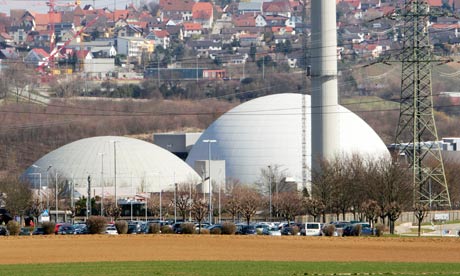
Once again, it’s time to elaborate why exactly I am a part of the sustainability/environmental movement. Recently, I’ve said what are probably controversial statements, at least among the environmental movement. On NPR radio and CSPAN, I’ve publicly come out in favor of careful and judicious use of nuclear power in future as a green technology. I believe that nuclear power, applied in a safe and controlled manner, will be critical to creating the cleaner, better future. But that's the topic of my next blog post. In this blog post, I want to clarify why I am a part of the environmental movement, and what I think about the earth's future (along with humanity's future).
I’m going to be clear-I believe that the earth, and humanity, will survive the coming climate change(s). Even resource depletion (including what is commonly called peak oil) will be solved in due time. The reason is that as resources get scarcer, as the impacts of climate change get worse and worse, more and more attention will be focused on the issues. Even the big dirty energy corporations which have normally opposed efforts dedicated towards alternative sources of energy (and increases in sustainable living) will have no choice but to transition to more sustainable/environmentally friendly approaches. Of course, they will be unwilling and hesitant to change, but they will be forced to in order to stay economically viable. Various environmental and sustainability related movements will gain more credence, and as more clean technologies and lifestyles develop (whether willingly or otherwise), the crises will pass, in time.
Climate change and resource depletion will be endured and humanity as a whole will survive. The planet will survive. Barring random meteors colliding with the earth, large-scale bio-terrorism or nuclear war, humanity will not be wiped out. We've endured immense problems before (although none of this nature). The survival of our species and the planet should not be in question. But that does NOT mean there is nothing to worry about.
The real issue is the type of transition into the future. While our species and the planet might survive the upcoming changes and upheavals, many people and other species may very well not. The majority of those people are in developing or third-world countries. Regardless of their location or economic status, the lives (the actual lives and their quality) of many impoverished millions are at serious risk, and the relative comfort of much of the first world is at stake as well. Beyond just humans, the survival of an immense number of species (the majority of which are unknown), several of which are critical to a variety of large and important ecosystems, is also in question (due to climate change, deforestation, and other factors, many of which are human-induced). While it is unlikely that the loss of these species will result in the end of humanity's existence on earth (or all life on earth), the sheer value of the species lost (both in terms of principle [aesthetic qualities and other philosophical values] and physical usefulness to humanity) cannot be understated.
Our actions in the coming 10 to 20 years will determine whether or not the transition to a (hopefully, through our efforts and the efforts of countless others in various fields and movements) better world is relatively smooth, with a minimization of lives lost or ruined (which will occur to some degree-climate change is already happening, and even if we were to magically reduce carbon dioxide levels to below 250 ppm, climate change's effects would still hurt quite a few people, especially in low-lying areas that are prone to flooding, for example), or is a rocky, ugly affair, with humanity limping into a new era (in this scenario, the effects of climate change and resource depletion took longer to generate a response on a large level, leading to an unnecessarily large number of deaths and drop in the quality of life for many). That is the crossroads. We can try to make the best of a bad situation and ease into a cleaner, more sustainable, and better future, or we will be dragged kicking and screaming, bloody and battered, into a bleaker world.
~Adarsha Shivakumar



 Posts
Posts


