.

.

Saturday, June 30, 2012

Adarsha's personal views regarding environmentalism/sustainability

He's right to a certain degree, but that's not the issue.


Once again, it’s time to elaborate why exactly I am a part of the sustainability/environmental movement. Recently, I’ve said what are probably controversial statements, at least among the environmental movement. On NPR radio and CSPAN, I’ve publicly come out in favor of careful and judicious use of nuclear power in future as a green technology. I believe that nuclear power, applied in a safe and controlled manner, will be critical to creating the cleaner, better future. But that's the topic of my next blog post. In this blog post, I want to clarify why I am a part of the environmental movement, and what I think about the earth's future (along with humanity's future).

I’m going to be clear-I believe that the earth, and humanity, will survive the coming climate change(s). Even resource depletion (including what is commonly called peak oil) will be solved in due time. The reason is that as resources get scarcer, as the impacts of climate change get worse and worse, more and more attention will be focused on the issues. Even the big dirty energy corporations which have normally opposed efforts dedicated towards alternative sources of energy (and increases in sustainable living) will have no choice but to transition to more sustainable/environmentally friendly approaches. Of course, they will be unwilling and hesitant to change, but they will be forced to in order to stay economically viable. Various environmental and sustainability related movements will gain more credence, and as more clean technologies and lifestyles develop (whether willingly or otherwise), the crises will pass, in time.


Climate change and resource depletion will be endured and humanity as a whole will survive. The planet will survive. Barring random meteors colliding with the earth, large-scale bio-terrorism or nuclear war, humanity will not be wiped out. We've endured immense problems before (although none of this nature). The survival of our species and the planet should not be in question. But that does NOT mean there is nothing to worry about.


The real issue is the type of transition into the future. While our species and the planet might survive the upcoming changes and upheavals, many people and other species may very well not. The majority of those people are in developing or third-world countries. Regardless of their location or economic status, the lives (the actual lives and their quality) of many impoverished millions are at serious risk, and the relative comfort of much of the first world is at stake as well. Beyond just humans, the survival of an immense number of species (the majority of which are unknown), several of which are critical to a variety of large and important ecosystems, is also in question (due to climate change, deforestation, and other factors, many of which are human-induced). While it is unlikely that the loss of these species will result in the end of humanity's existence on earth (or all life on earth), the sheer value of the species lost (both in terms of principle [aesthetic qualities and other philosophical values] and physical usefulness to humanity) cannot be understated.


Our actions in the coming 10 to 20 years will determine whether or not the transition to a (hopefully, through our efforts and the efforts of countless others in various fields and movements) better world is relatively smooth, with a minimization of lives lost or ruined (which will occur to some degree-climate change is already happening, and even if we were to magically reduce carbon dioxide levels to below 250 ppm, climate change's effects would still hurt quite a few people, especially in low-lying areas that are prone to flooding, for example), or is a rocky, ugly affair, with humanity limping into a new era (in this scenario, the effects of climate change and resource depletion took longer to generate a response on a large level, leading to an unnecessarily large number of deaths and drop in the quality of life for many). That is the crossroads. We can try to make the best of a bad situation and ease into a cleaner, more sustainable, and better future, or we will be dragged kicking and screaming, bloody and battered, into a bleaker world.


~Adarsha Shivakumar

Wednesday, June 20, 2012

Speaking Youth to Power

 Dear followers,

A few months ago, Adarsha and two other college students spoke about youth environmental activism and ways in which young activists could facilitate change at the Commonwealth Club of California. Among the topics they addressed were environmental activism, climate change, green jobs, the Obama administration's record, energy policy, Keystone Pipeline, food, and their impressions of older generations.

In this short clip, Adarsha describes his involvement in environmental activism and how he joined a lawsuit to sue the state of California. Click here to view it now!

The entire C-SPAN broadcast can be viewed here!

~Apoorva

Friday, February 10, 2012

Sirona Cares' Rural Electrification Project

Dear followers,

In addition to Jatropha cultivation, our partner Sirona Cares has launched a Rural Electrification Project in Haiti. This economically sustainable project brings electricity to rural villages in Haiti, promotes entrepreneurship, creates jobs, and helps to develop a formal economy. This is just another example of wonderful work our partner does. Please check out this link and their blog to learn more about the project: http://sironacares.typepad.com/sirona_cares/2012/01/ieeesirona-rural-electrification-project-ramping-up.html.

~Apoorva

Thursday, December 22, 2011

Slashing California Greenhouse Gas Emissions

When talks of combating or mitigating anthropogenic climate change come up, the inevitable “well,even if it exists, how can we act without crippling our industries” question or statement comes up. It may sound pessimistic, but it’s a vital question that must be answered. Humanity has been pumping out massive amounts of greenhouse gases for the past 150 years, and we need to lower our output significantly by 2050 or so in order to make the impacts of climate change less severe. But given how inefficient and dirty the current global energy infrastructure is, people often ask, rightfully so, whether or not it’s unreasonable to expect massive carbon emissions cuts within the next 40 to 50 years.

Even thinking on the small scale, such as reducing emissions in California-a giant state in and of itself-may seem impossible at first. But, according to a team of researchers from the U.S. Department of Energy's Lawrence Berkeley National Laboratory (Berkeley Lab) and the San Francisco-based energy consulting firm Energy and Environmental Economics, it is.

Distilling the article, the three main ways that California can cut greenhouse gas emissions by 80% by 2050 are as follows: the primary method will be energy efficiency (“The scientists found that the largest share of greenhouse gas reductions from energy efficiency comes from the building sector via improvements in building shell, HVAC systems, lighting, and appliances.”), the next two methods will be cleaner power generation (“Another 27 percent reduction in emissions comes from switching to electricity generation technologies that don't pour carbon dioxide into the atmosphere. Renewable energy, nuclear power, and fossil fuel-powered generation coupled with carbon capture and storage technology each has the potential to be the chief electricity resource in California. “) and going from gas to electric for many items (“So they turned to cars, space and water heaters, and industrial processes that consume fuel and natural gas. They determined that most of these technologies had to be electrified, with electricity constituting 55 percent of end-use energy in 2050, compared to 15 percent today. Overall, this nets a 16-percent reduction in greenhouse gas emissions, the final push needed to achieve an 80-percent reduction below 1990 levels.”).

The article is linked in full here: http://www.physorg.com/news/2011-11-how-to-slashing-california-greenhouse-gas.html


Saturday, September 3, 2011

Pictures from India (Pondicherry)

Purchasing the plants at the Pondicherry nursery

Bala introducing Adarsha and Apoorva to the international volunteers

Planting with the volunteers

More planting with the volunteers

More planting with the volunteers and school children

Bala, his wife, and child standing in front of the school

Adarsha and some of the international volunteers distributing apples to the children

Apoorva helping distribute sweets to the children

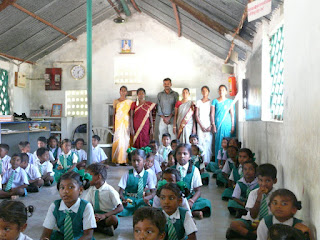
Bala and the schoolteachers, along with some of the students

Thursday, September 1, 2011

Our return to India (Part 1)

Dear followers,

We’ve returned from India (actually, we returned on August 21st, but we’re still recovering from jetlag), and with us, we bring more (mostly good) news about Project Jatropha.

There were two major Project Jatropha-related...events that happened during this year’s India visit. One was the visiting of the farmers who have been taking part in Phase II of Project Jatropha, and the other was the expansion of the project to Pondicherry.

For those of you who don’t know (ie, most everyone who hasn’t lived in India), Pondicherry is in the state of Tamil Nadu. Up to this point, all of Project Jatropha’s work in India has been centered in the Mysore-Hunsur area, which is in the state of Karnataka. Tamil Nadu is also in south India, and is actually right next to Karnataka. However, the primary language spoken in Tamil Nadu is, unsurprisingly, Tamil, whereas Kannada is the main language spoken in Karnataka. The languages are not similar at all, and travel would become an issue since directions were always in Tamil (whether verbal or written). But eventually, we got to Pondicherry.

There, we met with Bala, a man who works with an NPO (non profit organization) called VET (Vallalar Educational Trust) there. Taken from their website, their goal is as follows: VET aims at Rural Welfare Reforms for the Indian Woman and Girl Child, Social welfare and Health Welfare. We assist women by forming self-help groups, leadership training, income generation programme, immunisation and family planning advice, and mother and child nutrition programmes.

Bala was an engineer who decided to come back to his home town in order to better it-he saw the state that the area was in, and realized that his talents, energy, and enthusiasm could better serve the people in his community. Bala was also quick to realize that one of the main areas to focus on was the children-because with them lay the hope of changing the future. Cliche? Arguably. True? Very much so. Many of these children are among the first in their families to receive a formal education of any sort-most of their parents are illiterate and only know how to sign their names. By helping give them an education, Bala was enabling them to have a future beyond being stuck in their current socioeconomic position.

First, we went to a local nursery, which had been established a few decades ago, to purchase plants. Bala, who had already bought plants there before, was able to obtain a discount, as we were helping the school rather than making a purchase directly for ourselves. All in all, the amount of money spent totaled less than 2000 rupees (which is around $50 US), and with it we bought around 20 plants of varying types (details will be uploaded onto our official website shortly). Then, we hired an autorickshaw to transport the plants to the school, which cost a few hundred rupees.

Once in the school site, we met up with the international volunteers. Upon seeing them, we exchanged names and our places of origin. Many of them were from Europe, with one person from China. The majority of people were from Holland or Spain, but there were people from France and Belgium as well. Turns out they were all part of an exchange program of sorts, whereby volunteers like them would come to India, spend time among the locals, and participate in various projects dedicated towards helping the impoverished.

Around 100 kids were in the school, which was a small institution. There was very little lighting, and it was really the perfect picture of an impoverished school that you might see in an ad asking for donations. The entire school consisted of three buildings. Books were there, but clearly more were needed; there were few (if any) blackboards and there were no desks or chairs for the students, who had to sit on the floor. Despite the hard work of the teachers, it was still a challenge to educate the children with what little resources that were available. Yet, we found out that despite the dire need of resources for schools such as this one, politicians have instead been giving out free televisions to households in order to buy their votes (and the recipients would be reminded to vote for the candidate with the numerous ads that would be shown, ironically enough). This frankly shameful lack of priorities among the local politicians was a perfect example of the lack of care for the rural folk that Bala has been addressing.

After introductions, the actual planting began. Bala handed out the plants to us (Apoorva, me, and the international volunteers), along with some of the students. We were instructed to take off our socks before entering the field as it had rained the day before, and it soon became apparent why-although the ground looked fine, I quickly sank a good 6 inches into it when I stepped anywhere. Fortunately, Bala had already had the holes dug prior to yesterday’s rainfall, so our lives were that much easier. Once we all were in position, the plants were gently placed into the holes, which were filled in with a combination of manure and soil. Done with planting, we all washed our hands and sat down to eat.

We ended the successful planting with lunch, which was a vegetable biriyani cooked in a giant pot. After eating, we found out that Bala had hired a cook who usually does the kind of cooking in weddings just to cater for us-we were flattered at this display, because doing so certainly would have cost a large sum of money (especially considering that Bala certainly needed the money far more than we did). Regardless, we thanked Bala for his generosity and ate heartily.

Afterward lunch, we decided upon distributing the fruits to the school, which we did with help from the international volunteers. We learned from the international volunteers that the favorite fruit of many schoolchildren was apples. And lucky for us, we had brought apples-enough for the whole school, students and teachers alike. The entire school was incredibly grateful for the plants and the fruit. Bala thanked us (even though he had done much of the work by choosing and readying the school, as well as making sure the pits were dug out beforehand), and we intend to continue our work in Pondicherry. In the future, we hope to introduce small amounts of Jatropha to the schools (perhaps as fences) as well as assorted fruit and ornamental plants.


The next blog post will talk about the revisiting of the Phase I and II sites of Project Jatropha, and what decisions transpired as a result.

~Adarsha